Team Co-leaders

Emma Bourgogne
MSc of Life Science Informatics
University of Helsinki

Henna Salonoja
MSc of Biotechnology
Aalto University

Kathryn Brooks
MSc of Neuroscience
University of Helsinki
Aalto-Helsinki · iGEM 2026

Our Project
Histamine is a biogenic amine that occurs naturally in certain types of food, such as cheese, wine, fermented foods, spinach, and seafood[1]. Histamine accumulation in the gastrointestinal tract can provoke adverse physiological reactions, including skin rashes, diarrhea, abdominal pain, or low blood pressure[2]. For healthy individuals, the problem is mediated by diamine oxidase (DAO) —an intestinal enzyme that catalyzes the degradation of this biogenic amine[3]. However, for the approximately 1% of people worldwide that suffer from histamine intolerance, this unfortunately might not be the case[1].
Histamine intolerance can arise from multiple factors, including genetic variants, medications, alcohol consumptions, and other diseases[3]. However, these factors often converge on one common mechanism: reduced DAO activity. Because of the central role of DAO in histamine metabolism, the impairment of its activity ultimately leads to excessive histamine accumulation and the resulting physiological reactions mentioned above.
Our project aims to provide additional assistance to people with histamine intolerance through a fusion protein-based histamine test-strip. The fusion protein consists of a DAO domain for histamine degradation, a color-changing enzyme, and a cellulose-binding protein to bind the complex onto the test strip. As the test-trip detect a certain amount histamine, hydrogen peroxide (H2O2) is released as a product of the histamine degradation reaction by DAO[4]. The test-trip then displays a change of color following the interaction between H2O2 and the color-changing enzyme. The product is envisioned to be home-use friendly and convenient to use in everyday life.
[1] L. Maintz and N. Novak, "Histamine and histamine intolerance," The American Journal of Clinical Nutrition, vol. 85, no. 5, pp. 1185-1196, 2007, doi: https://doi.org/10.1093/ajcn/85.5.1185.
[2] M. Hrubisko, R. Danis, M. Huorka, and M. Wawruch, "Histamine Intolerance—The More We Know the Less We Know. A Review," Nutrients, vol. 13, no. 7, p. 2228, 2021. [Online]. Available: https://www.mdpi.com/2072-6643/13/7/2228.
[3] Y. Zhao, X. Zhang, H. Jin, L. Chen, J. Ji, and Z. Zhang, "Histamine Intolerance—A Kind of Pseudoallergic Reaction," Biomolecules, vol. 12, no. 3, p. 454, 2022. [Online]. Available: https://www.mdpi.com/2218-273X/12/3/454.
[4] E. López-Sabater, J. Rodriguez‐Jerez, A. Roig‐Sagues, and M. Mora‐Ventura, "Determination of histamine in fish using an enzymic method," Food Additives & Contaminants, vol. 10, no. 5, pp. 593-602, 1993, doi: https://doi.org/10.1080/02652039309374183.
MSc of Life Science Informatics
University of Helsinki
MSc of Biotechnology
Aalto University
MSc of Neuroscience
University of Helsinki

MSc of Genetics and Molecular Biosciences
University of Helsinki

MSc of Bioproducts Engineering
Aalto University

BSc of Molecular Biosciences
University of Helsinki
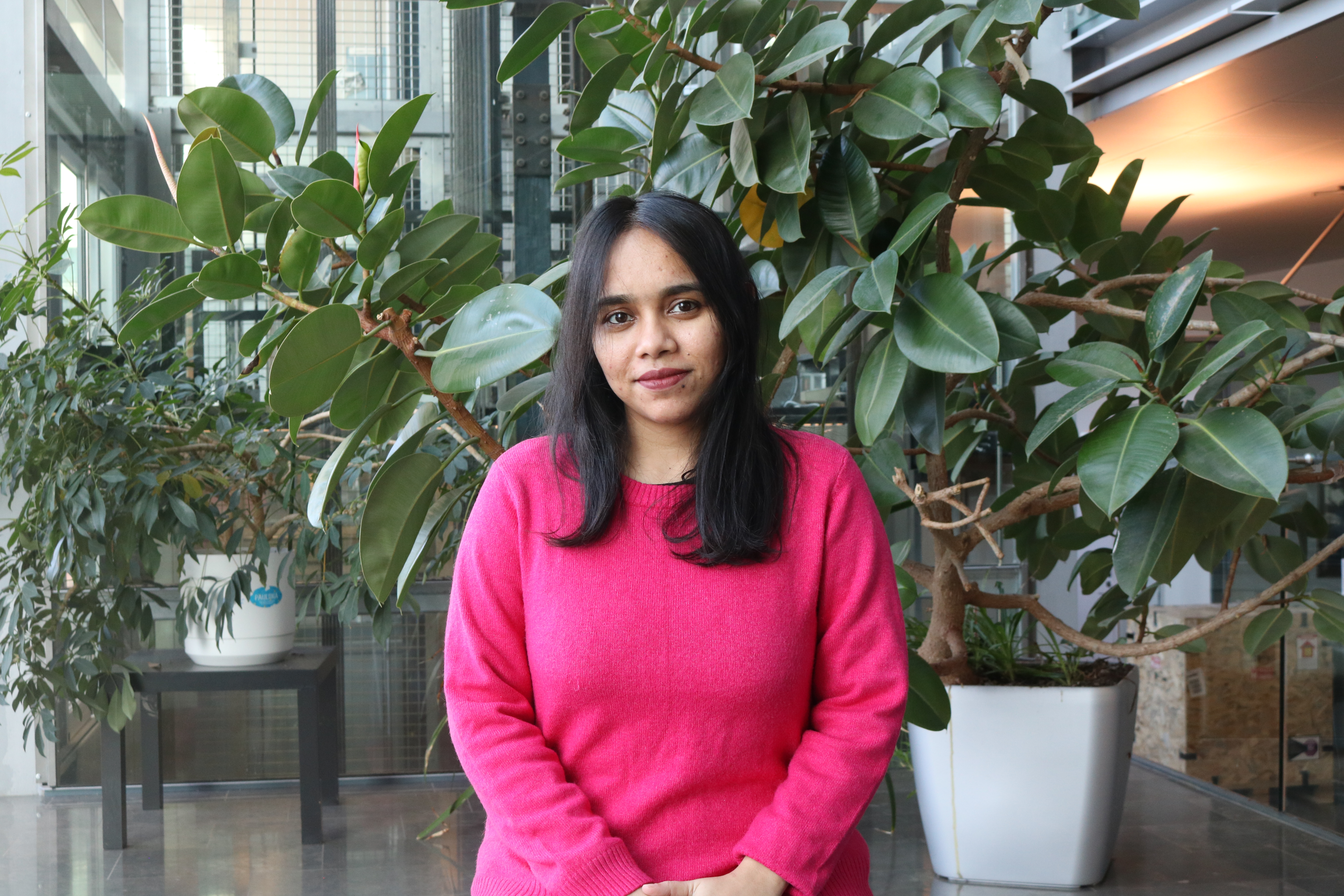
MSc of Integrative Plant Science
University of Helsinki

MSc in Genetics and Molecular Biosciences
University of Helsinki

MSc in Pharmaceutical Research, Development and Safety
University of Helsinki

MSc of Microbiology and Microbial Biotechnology
University of Helsinki

MSc in Complex Systems - Life Science Technologies
Aalto University

MSc of Genetics and Molecular Biosciences
University of Helsinki
 Competition
The world's biggest synthetic biology competition is pioneering and driving the growth of the field. Each year, it gives multidisciplinary student teams the incentive, tools, training, and platform to design, build, test, and present projects tackling the world's most pressing challenges — while competing on the global stage.
iGEM Grand Jamboree 2026
November 13, 2026 — Paris, France
The Jamboree is here! 🎉
We thank our partners. Their support made this project possible.